Most businesses describe what they sell.
Customers think about what they're trying to solve.
That gap is where a lot of marketing gets lost.
A customer probably doesn't wake up thinking:
"I need a strategic consulting engagement."
They wake up thinking:
"We can't keep operating like this."
They don't necessarily want a new website.
They want customers to finally understand what their company does.
They don't want content.
They want visibility, credibility, and opportunities.
They don't want brand strategy.
They want clarity.
Your Product Has Two Definitions
There's the thing you sell.
And there's what the customer believes they're buying.
Those aren't always the same.
An architect may sell architectural services.
The client may be buying confidence that a multimillion-dollar project will be designed correctly.
A software company may sell a platform.
The customer may be buying fewer mistakes, better visibility, and time back.
A consultant may sell strategy.
The client may be buying a way out of uncertainty.
Understanding that distinction changes how you communicate.
Instead of leading with:
Here's what we do.
You begin with:
Here's what you're trying to accomplish.
Start With the Problem
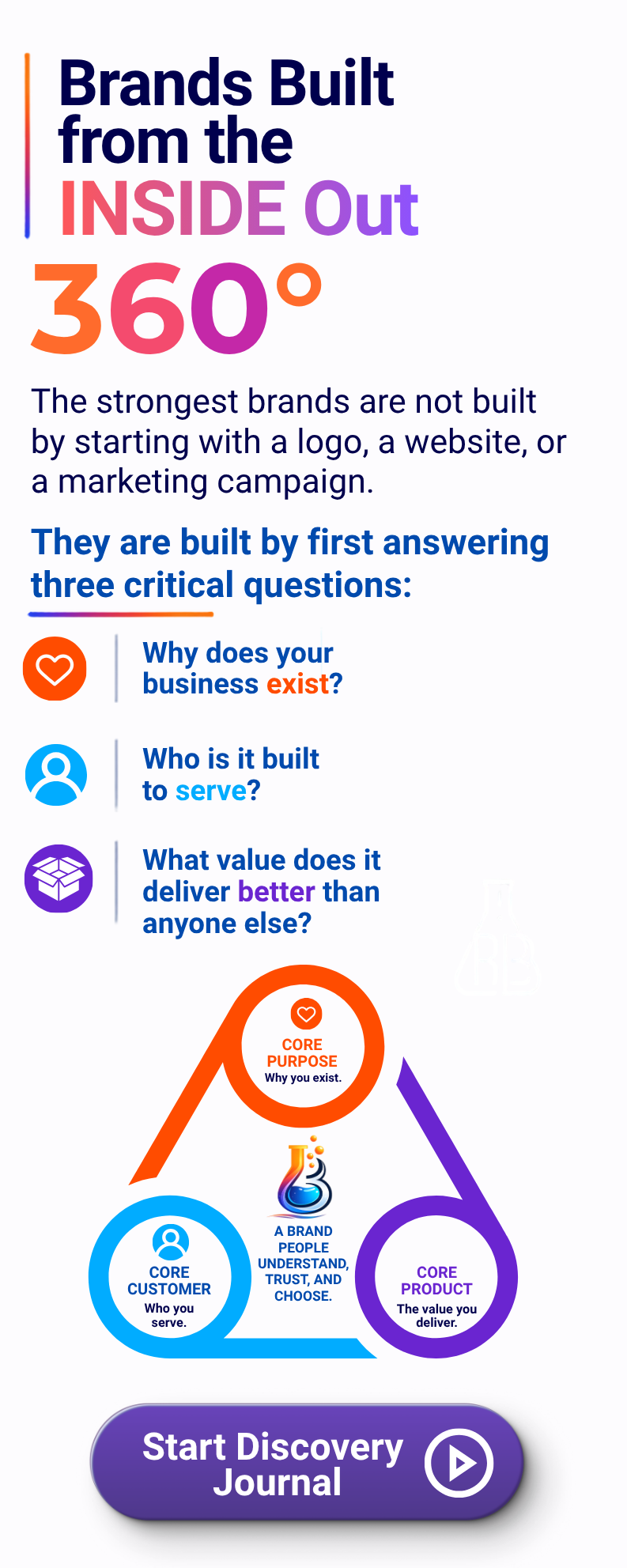
One of the most important parts of our Brand 360° work is getting beneath demographics and into the reality of the Core Customer.
What are they responsible for?
What are they frustrated by?
What keeps getting harder?
What have they already tried?
What happens if the problem doesn't get solved?
How does that affect the business?
Their team?
Their customers?
Their reputation?
Their career?
And importantly:
How do they feel before the problem is solved—and how should they feel afterward?
That's where meaningful messaging begins.
Features Matter. Context Makes Them Relevant.
Customers still need to know what you do.
But a list of services without context forces them to make the connection themselves.
Strong brands make that connection obvious.
They communicate:
We understand the problem.
We understand what's at stake.
We have a clear way to solve it.
Here's what becomes possible afterward.
That's when marketing stops sounding like a company talking about itself and starts sounding like a company that understands its customer.
Your customer doesn't simply want what you sell.
They want the progress it creates.
Find that.
Name it.
Build the story around it.
Because the strongest positioning doesn't begin with the product.
It begins with the problem the customer is determined to solve.